
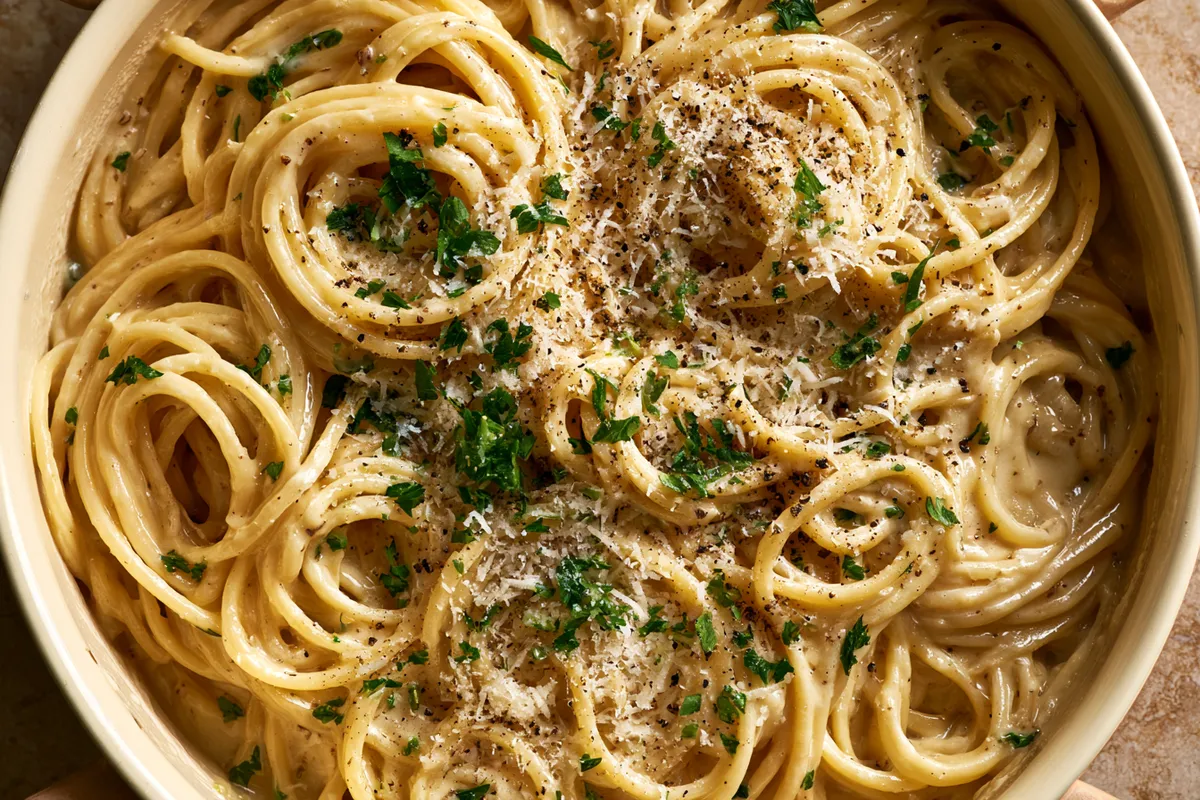
Silky noodles, tender from the center out, are coated in a garlicky Parmesan sauce that forms right in the pot. This one pot creamy garlic pasta is rich enough to feel like comfort food, yet it comes together with everyday ingredients in about 20 minutes.
The pasta cooks directly in milk and water, so its starch naturally gives the sauce body. There’s no separate pot to drain and no fussy roux to whisk. A little stirring is all it takes to keep the noodles cooking evenly and the sauce smooth.
Serve it straight from the pot with herbs and extra Parmesan, then add a simple salad or crisp vegetables alongside. It’s an easy meatless dinner, but also a handy base for chicken, shrimp, or sautéed mushrooms.
Why You’ll Love This Recipe
- One pot, less cleanup: The noodles and sauce cook in the same deep skillet or pot.
- Big garlic-Parmesan flavor: Briefly warming the garlic in butter or oil brings out its aroma without making it harsh.
- Ready quickly: With a five-minute prep and roughly 15 minutes on the stove, it suits busy evenings.
- Easy to adapt: Use the pasta shape and milk you have, then finish with your favorite vegetables or protein.
Ingredient Notes
- Pasta: Spaghetti, linguine, or penne all work well. Long noodles make a particularly silky one pot creamy garlic pasta, while penne is convenient for scooping. Use regular dried pasta rather than fresh pasta, which cooks too quickly for this method.
- Garlic: Four fresh cloves give the sauce its signature flavor. Mince them finely so they distribute through the pasta. Jarred minced garlic can work in a pinch; use about 1 1/2 teaspoons.
- Butter or olive oil: Butter adds a rounded, classic flavor. Olive oil is a good dairy-free starting point if you plan to use plant milk and a dairy-free Parmesan alternative.
- Milk and water: Whole milk makes the fullest sauce, though 2% milk is fine. The water helps the pasta hydrate without making the sauce overly heavy. Keep a little extra water nearby in case the pan looks dry before the pasta is tender.
- Parmesan: Freshly grated Parmesan melts more smoothly than the shelf-stable grated kind. Pecorino Romano is a saltier, sharper substitute, so taste before adding extra salt.
- Italian seasoning and herbs: Italian seasoning adds gentle herbal warmth. Fresh parsley or basil at the end brightens the creamy sauce.
One Pot Creamy Garlic Pasta
This recipe makes four side-dish or light main-dish servings. Choose a wide, deep skillet or a large pot so the pasta has room to soften and you can stir comfortably.
Ingredients
- 8 ounces dried spaghetti, linguine, or penne
- 1 tablespoon butter or olive oil
- 4 garlic cloves, finely minced
- 2 cups milk, preferably whole milk
- 1 cup water, plus more as needed
- 3/4 cup freshly grated Parmesan cheese, plus more for serving
- 1/2 teaspoon kosher salt, plus more to taste
- 1/4 teaspoon freshly ground black pepper
- 1 teaspoon Italian seasoning
- 2 tablespoons cream cheese or sour cream, optional
- Chopped parsley or basil, optional, for serving
Instructions
- Set a large pot or deep skillet over medium heat. Melt the butter, or warm the olive oil, then add the garlic. Stir for 1 to 2 minutes, just until fragrant. Keep it moving: garlic can turn bitter quickly if it browns too deeply.
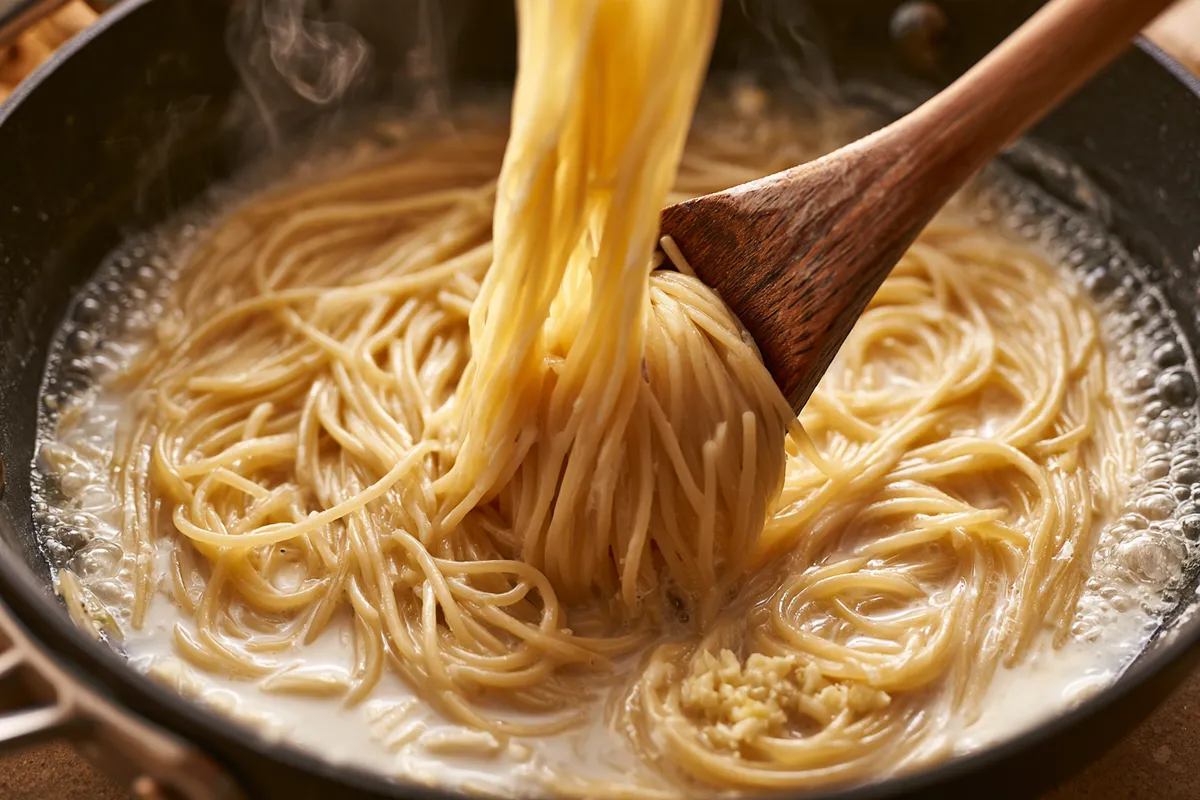
- Add the dry pasta, milk, and 1 cup water. Press and turn the noodles so they are mostly submerged; break long pasta in half only if your pan is too narrow. Bring the liquid to a gentle boil, stirring once or twice as it heats.

- Lower the heat to maintain a lively simmer. Cook uncovered for 8 to 10 minutes, stirring frequently and separating any noodles that cling together. The pasta will release starch as it cooks, turning the cooking liquid into a lightly creamy sauce. Add a splash of water if the liquid disappears before the pasta is al dente.
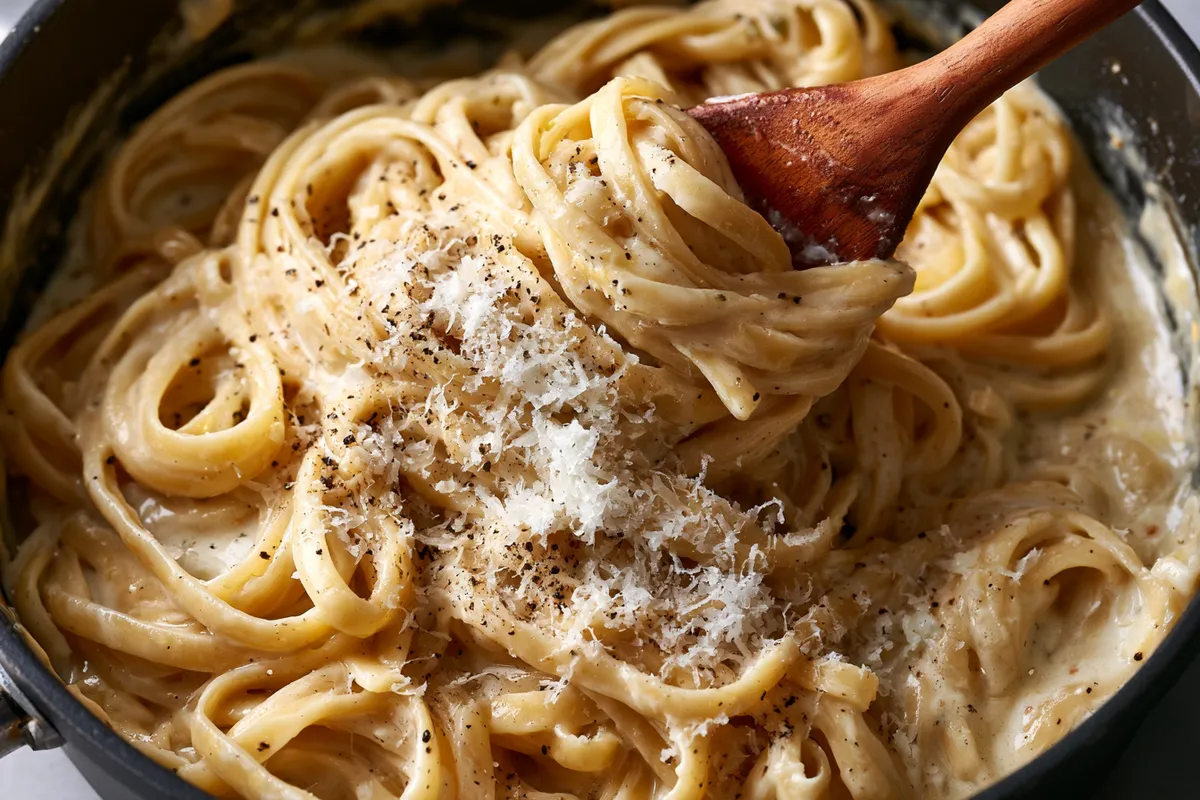
- When the pasta is tender with a little bite and there is a small amount of saucy liquid in the pan, take it off the heat. Stir in the Parmesan, salt, pepper, and Italian seasoning until the cheese melts. Fold in cream cheese or sour cream now, if using, for an even softer, richer finish.
- Let the pasta stand for 1 to 2 minutes to thicken, then taste and adjust the seasoning. Scatter parsley or basil over the top and serve hot with extra Parmesan and black pepper.
Tips & Variations
- Stir often, especially at the start. Pasta that sits in a shallow layer can stick to the bottom or to itself. Frequent stirring also distributes the starch, which is what gives the sauce its creamy texture without flour.
- Use gentle heat after boiling. A hard boil can reduce the milk too fast and make the sauce catch at the edges. A steady simmer cooks the pasta through while leaving enough liquid to finish the sauce.
- Grate the cheese yourself. Fresh Parmesan melts into the hot pasta more readily. Pre-shredded cheese often contains anti-caking agents, which can leave a slightly grainy sauce.
- Make it your own. Stir in baby spinach during the last minute, or add cooked chicken, shrimp, peas, broccoli, or mushrooms after the cheese melts. For a little heat, add a pinch of red pepper flakes with the garlic. Lemon zest over the finished pasta gives the rich sauce a fresh lift.
Serving and Storage
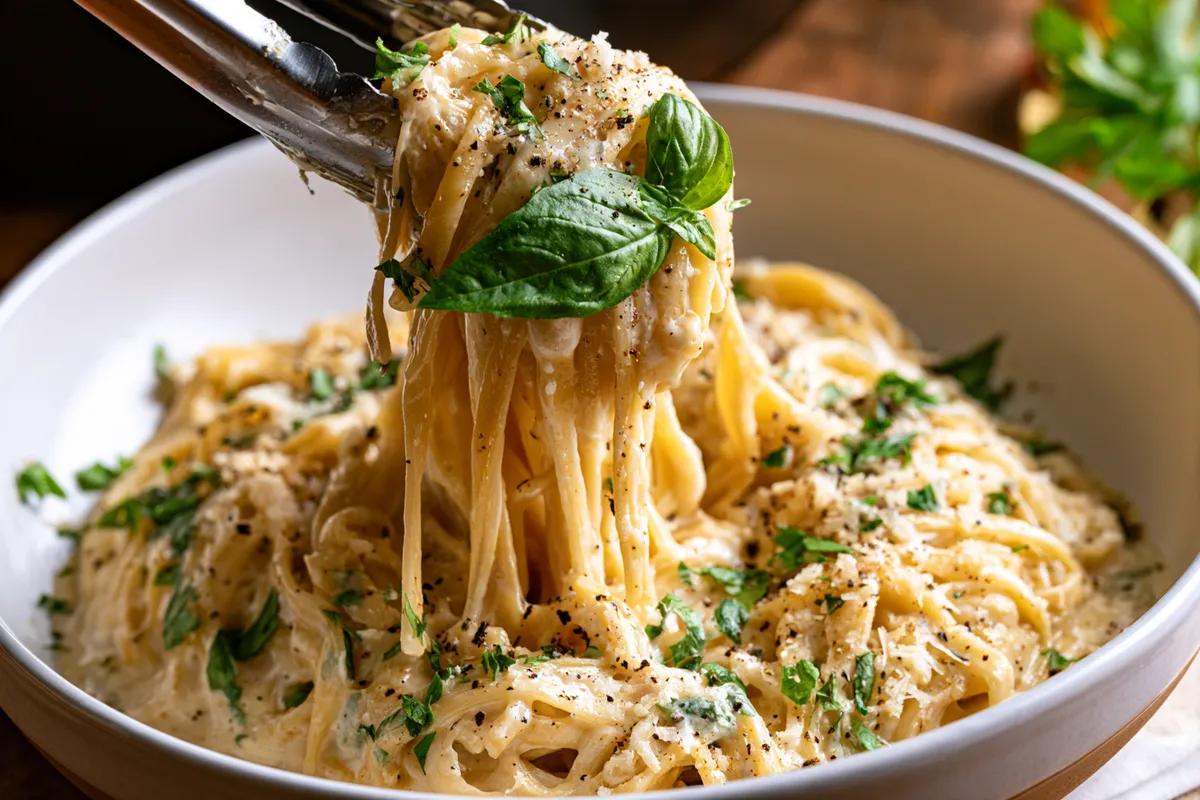
A crisp green salad with a tangy vinaigrette balances the richness of one pot creamy garlic pasta beautifully. Garlic bread is always welcome for catching the extra sauce, and roasted broccoli, asparagus, or green beans add color and a satisfying bite. For a heartier plate, top each bowl with sliced cooked chicken or sautéed shrimp.
Cool leftovers promptly and refrigerate them in an airtight container for up to 3 days. The noodles will absorb sauce as they sit, so they won’t be quite as loose and silky the next day, but they’re still very good.
Reheat gently in a skillet over low heat with a splash of milk or water, stirring until the sauce loosens and the pasta is hot. The microwave works too: cover loosely, heat in short intervals, and stir in a spoonful of liquid between intervals. Avoid high heat, which can make a dairy-based sauce separate.
You Might Also Like
- Cheesy Chicken Pasta Skillet
- One Pot Creamy Chicken Pasta with Tomatoes and Parmesan
- Creamy Garlic Parmesan Chicken Mushroom Pasta
- Creamy Parmesan Chicken Pasta Recipe with Spinach
Frequently Asked Questions
Can I use a different pasta shape?
Yes. Spaghetti, linguine, fettuccine, and penne are dependable choices. Very small pasta shapes may need less liquid and a shorter cooking time, while thicker shapes may need an extra splash of water. Watch for al dente texture rather than relying only on the clock.
Why is my sauce too thick or too thin?
If it is too thick, stir in milk or water a tablespoon at a time over low heat. If it seems thin, let it rest off the heat for a couple of minutes; Parmesan and pasta starch continue thickening the sauce as it cools slightly. You can also simmer it briefly while stirring.
Can I make this without whole milk?
Absolutely. Reduced-fat milk works, though the result is a little less rich. For the creamiest texture with lighter milk, use the optional cream cheese. Unsweetened, unflavored plant milk can be used, but choose a variety you enjoy drinking and use a dairy-free Parmesan-style cheese if needed.
Can I add protein to creamy garlic pasta?
Yes. Add already-cooked chicken, sausage, or shrimp after the Parmesan so it warms without overcooking. For a vegetarian boost, white beans or drained chickpeas can be folded in at the same point.